Codex is coming to the ChatGPT app on mobile.
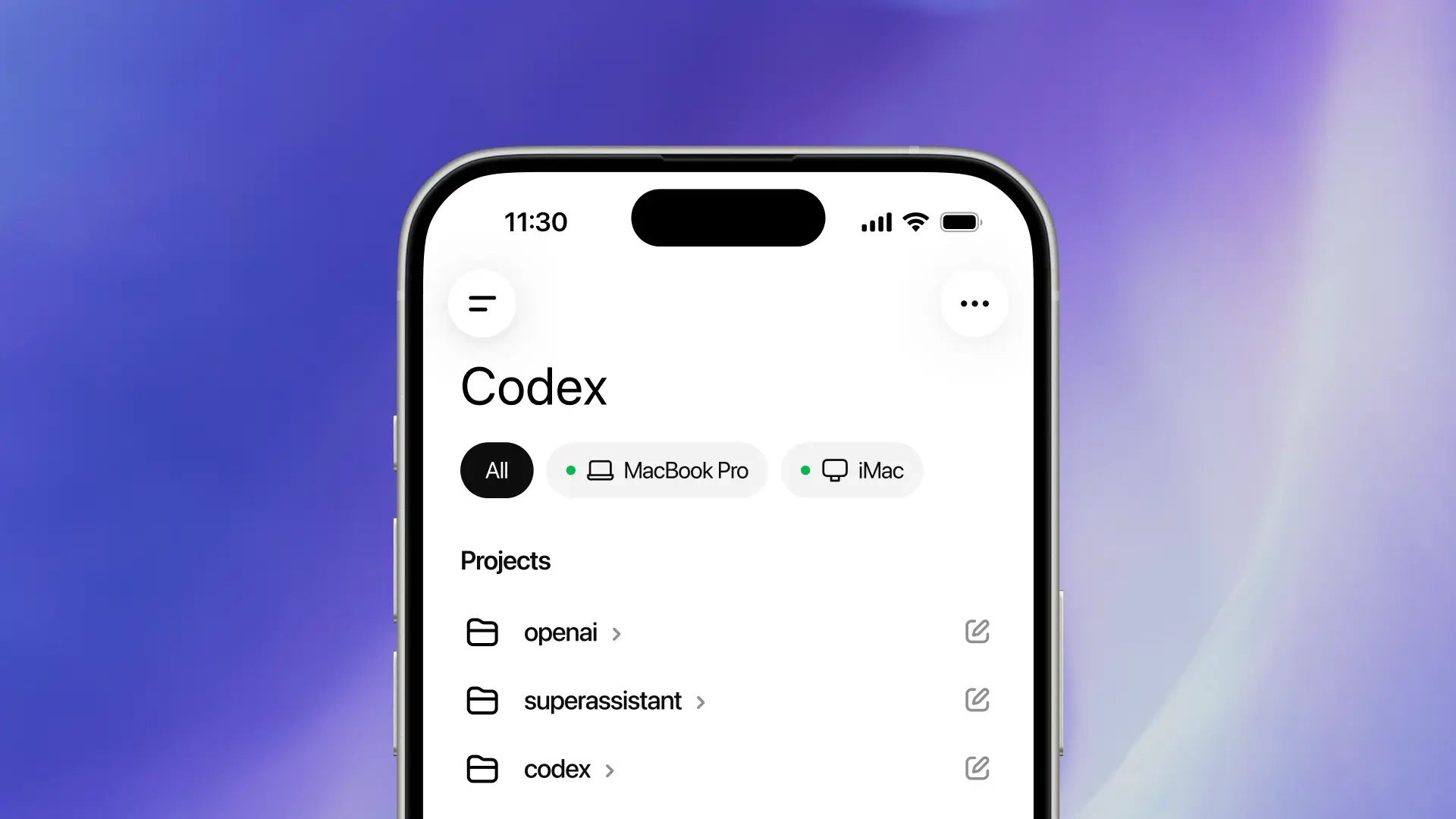
OpenAI is bringing Codex to the ChatGPT app on iOS and Android. The feature is available as a preview and allows users to monitor and adjust Codex work from their phone.
According to TestingCatalog, this does not change the phone into the location where the codebase runs. Codex continues to work on a laptop, Mac mini, devbox, or managed remote environment. The mobile app will primarily serve as a control panel: users can view active threads, read output, approve commands, switch models, add context, and monitor terminal output, screenshots, diffs, and test results.
In the official announcement, OpenAI confirms that files, credentials, permissions, and local setup remain on the machine where Codex is running. The mobile app loads the live status via a secure relay layer, ensuring trusted machines remain accessible without immediately making them public on the internet.
This aligns with a broader shift towards longer-running coding agents. Developers do not need to be constantly at their computers but can make quick decisions on the go: choose an approach, answer a question, check a diff, or authorize the next step. OpenAI is simultaneously extending Codex for enterprise workflows. Remote SSH is generally available, allowing Codex to run in approved remote development environments. Hooks are also generally available, for example for scanning for secrets, running validators, logging conversations, or customizing Codex behavior per repository.
The mobile Codex preview is rolling out on iOS and Android for all ChatGPT plans, including Free and Go, in supported regions. Remote SSH and Hooks are available on all plans. Programmatic access tokens are limited to Enterprise and Business, and HIPAA support applies only to eligible ChatGPT Enterprise workspaces with local environments.